The Problem
LLMs stream JSON token by token. Your structured output arrives as:
{"project": {"name": "Mo
{"project": {"name": "Mobile App", "status": "in_prog
{"project": {"name": "Mobile App", "status": "in_progress"}, "tasks": [{"title": "UI Redes
...
Standard encoding/json fails on every chunk except the last:
json.Unmarshal([]byte(`{"project": {"name": "Mo`), &result)
// error: unexpected end of JSON input
This was recently highlighted by swyx as a #1 or #2 performance issue in AI applications. You’re forced to wait for the complete response before showing anything to users - negating the entire point of streaming with json mode or structured output.
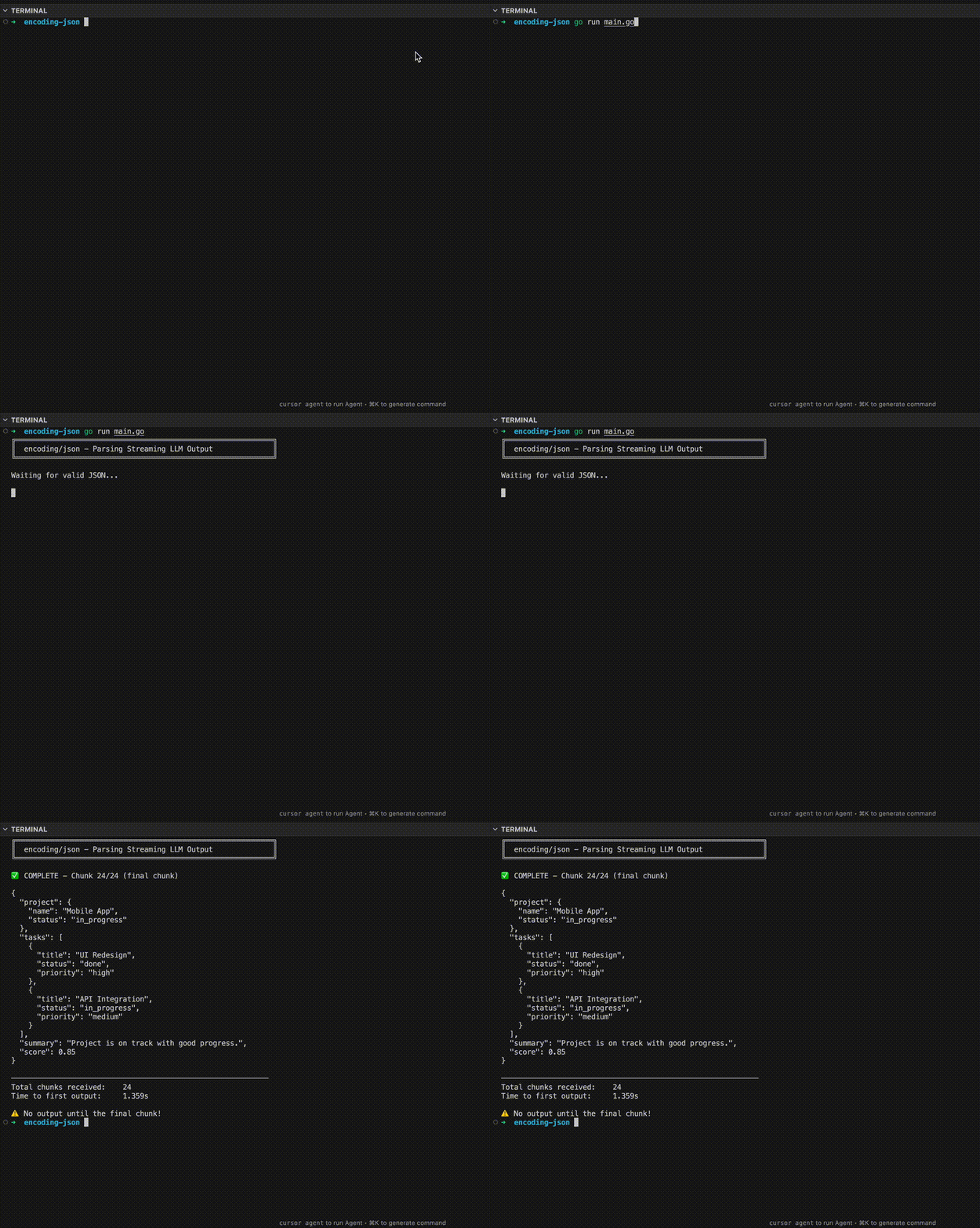
📄 View full demo code
package main

import (
	"encoding/json"
	"fmt"
	"math/rand"
	"time"
)

type Task struct {
	Title    string `json:"title"`
	Status   string `json:"status"`
	Priority string `json:"priority"`
}

type Project struct {
	Name   string `json:"name"`
	Status string `json:"status"`
}

type Response struct {
	Project Project `json:"project"`
	Tasks   []Task  `json:"tasks"`
	Summary string  `json:"summary"`
	Score   float64 `json:"score"`
}

func randomSleep() {
	ms := 10 + rand.Intn(91) // 10-100ms
	time.Sleep(time.Duration(ms) * time.Millisecond)
}

func main() {
	rand.Seed(time.Now().UnixNano())

	chunks := []string{
		`{"project":`,
		` {"name": "Mo`,
		`bile App", "`,
		`status": "in`,
		`_progress"},`,
		` "tasks": [{`,
		`"title": "UI`,
		` Redesign",`,
		` "status": "`,
		`done", "prio`,
		`rity": "high`,
		`"}, {"title"`,
		`: "API Inte`,
		`gration", "s`,
		`tatus": "in_`,
		`progress", "`,
		`priority": "`,
		`medium"}], "`,
		`summary": "P`,
		`roject is on`,
		` track with `,
		`good progres`,
		`s.", "score"`,
		`: 0.85}`,
	}

	fmt.Println("╔════════════════════════════════════════════════════════════╗")
	fmt.Println("║  encoding/json - Parsing Streaming LLM Output              ║")
	fmt.Println("╚════════════════════════════════════════════════════════════╝")
	fmt.Println()
	fmt.Println("Waiting for valid JSON...")
	fmt.Println()

	var buffer string
	var result Response
	startTime := time.Now()
	var timeToFirstOutput time.Duration

	for i, chunk := range chunks {
		buffer += chunk
		randomSleep()

		err := json.Unmarshal([]byte(buffer), &result)

		if err == nil {
			timeToFirstOutput = time.Since(startTime)

			fmt.Print("\033[2J\033[H") // Clear screen
			fmt.Println("╔════════════════════════════════════════════════════════════╗")
			fmt.Println("║  encoding/json - Parsing Streaming LLM Output              ║")
			fmt.Println("╚════════════════════════════════════════════════════════════╝")
			fmt.Println()
			fmt.Printf("✅ COMPLETE - Chunk %d/%d (final chunk)\n", i+1, len(chunks))
			fmt.Println()

			prettyJSON, _ := json.MarshalIndent(result, "", "  ")
			fmt.Println(string(prettyJSON))
		}
	}

	fmt.Println()
	fmt.Println("────────────────────────────────────────────────────────────")
	fmt.Printf("Total chunks received:    %d\n", len(chunks))
	fmt.Printf("Time to first output:     %v\n", timeToFirstOutput.Round(time.Millisecond))
	fmt.Println()
	fmt.Println("⚠️  No output until the final chunk!")
}
The Solution
godantic provides StreamParser - a streaming JSON parser that repairs incomplete JSON, tracks which fields are still coming, and validates on the fly.
parser := godantic.NewStreamParser[Response]()

for chunk := range llmStream {
    result, state, _ := parser.Feed(chunk)

    if state.IsComplete {
        fmt.Println("Done:", result)
    } else {
        // Shows: ["project.status", "tasks[1].title", ...]
        fmt.Printf("Waiting for: %v\n", state.WaitingFor())
    }
}
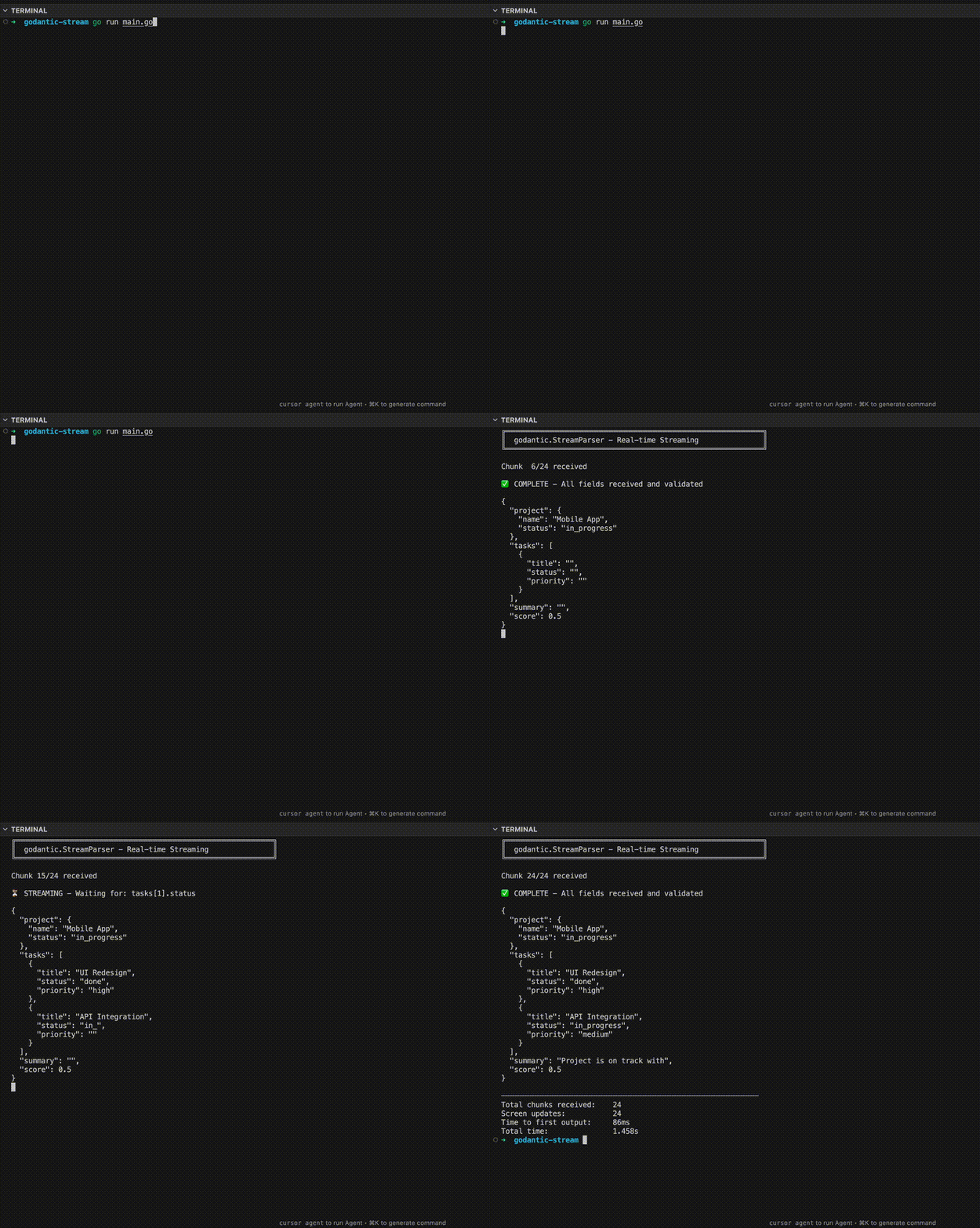
With godantic: nested fields populate in real-time as tokens arrive.
Time to first output drops from seconds to milliseconds - you’re no longer waiting for the complete response. This is a simple example, but the gains are significant for long generations where users would otherwise stare at a blank screen.
📄 View full demo code
package main

import (
	"encoding/json"
	"fmt"
	"math/rand"
	"time"

	"github.com/deepankarm/godantic/pkg/godantic"
)

type Task struct {
	Title    string `json:"title"`
	Status   string `json:"status"`
	Priority string `json:"priority"`
}

type Project struct {
	Name   string `json:"name"`
	Status string `json:"status"`
}

type Response struct {
	Project Project `json:"project"`
	Tasks   []Task  `json:"tasks"`
	Summary string  `json:"summary"`
	Score   float64 `json:"score"`
}

func (r *Response) FieldScore() godantic.FieldOptions[float64] {
	return godantic.Field(
		godantic.Default(0.5),
		godantic.Min(0.0),
		godantic.Max(1.0),
	)
}

func randomSleep() {
	ms := 10 + rand.Intn(91) // 10-100ms
	time.Sleep(time.Duration(ms) * time.Millisecond)
}

func main() {
	rand.Seed(time.Now().UnixNano())

	chunks := []string{
		`{"project":`,
		` {"name": "Mo`,
		`bile App", "`,
		`status": "in`,
		`_progress"},`,
		` "tasks": [{`,
		`"title": "UI`,
		` Redesign",`,
		` "status": "`,
		`done", "prio`,
		`rity": "high`,
		`"}, {"title"`,
		`: "API Inte`,
		`gration", "s`,
		`tatus": "in_`,
		`progress", "`,
		`priority": "`,
		`medium"}], "`,
		`summary": "P`,
		`roject is on`,
		` track with `,
		`good progres`,
		`s.", "score"`,
		`: 0.85}`,
	}

	parser := godantic.NewStreamParser[Response]()
	startTime := time.Now()
	var timeToFirstOutput time.Duration
	updateCount := 0

	for i, chunk := range chunks {
		randomSleep()

		result, state, _ := parser.Feed([]byte(chunk))

		if result == nil {
			continue
		}

		updateCount++
		if timeToFirstOutput == 0 {
			timeToFirstOutput = time.Since(startTime)
		}

		fmt.Print("\033[2J\033[H") // Clear screen
		fmt.Println("╔════════════════════════════════════════════════════════════╗")
		fmt.Println("║  godantic.StreamParser - Real-time Streaming               ║")
		fmt.Println("╚════════════════════════════════════════════════════════════╝")
		fmt.Println()

		fmt.Printf("Chunk %2d/%d received\n", i+1, len(chunks))
		fmt.Println()

		if state.IsComplete {
			fmt.Println("✅ COMPLETE - All fields received and validated")
		} else {
			waiting := state.WaitingFor()
			if len(waiting) > 0 {
				fmt.Printf("⏳ STREAMING - Waiting for: %s\n", waiting[0])
				if len(waiting) > 1 {
					fmt.Printf("              (and %d more fields)\n", len(waiting)-1)
				}
			}
		}
		fmt.Println()

		currentJSON, _ := json.MarshalIndent(result, "", "  ")
		fmt.Println(string(currentJSON))
	}

	totalTime := time.Since(startTime)
	fmt.Println()
	fmt.Println("────────────────────────────────────────────────────────────")
	fmt.Printf("Total chunks received:    %d\n", len(chunks))
	fmt.Printf("Screen updates:           %d\n", updateCount)
	fmt.Printf("Time to first output:     %v\n", timeToFirstOutput.Round(time.Millisecond))
	fmt.Printf("Total time:               %v\n", totalTime.Round(time.Millisecond))
}
How It Works
- Repairs incomplete JSON - closes unclosed strings, arrays, objects at any nesting level
- Tracks incomplete fields -
state.WaitingFor()returns paths like["project.name", "tasks[1].status"] - Skips validation for incomplete fields - no false errors mid-stream
- Applies defaults automatically - sensible fallbacks while data streams
The parser accumulates chunks internally, so each Feed() call returns the current best-effort parse of everything received so far.
Typed Schemas for LLMs
godantic also generates JSON schemas from your Go types - useful for LLM structured output:
type Response struct {
    Project  Project  `json:"project"`
    Tasks    []Task   `json:"tasks"`
    Summary  string   `json:"summary"`
    Score    float64  `json:"score"`
}

func (r *Response) FieldScore() godantic.FieldOptions[float64] {
    return godantic.Field(
        godantic.Default(0.5),
        godantic.Min(0.0),
        godantic.Max(1.0),
    )
}

// Generate schema for Gemini/OpenAI/Anthropic
schemaGen := schema.NewGenerator[Response]()
jsonSchema, err := schemaGen.GenerateFlattened()
The same types work for schema generation and streaming parse - one definition, used everywhere.
Try It
go get github.com/deepankarm/godantic
See the streaming example for a complete working demo with Gemini.